For years, great counter service was all it took. The customer walked in, was well received, made a purchase — and came back.
Today, that's no longer enough. The customer walks into the store with an opinion already formed and, very often, decides before even stepping inside.
The experience starts before the visit — and continues after the purchase.
What has changed in customer behavior?
Before walking into an optical store, the customer has already:
- Searched online
- Compared options
- Read reviews
And when they walk in, they already have a perception in mind.
After the purchase, they expect continuity:
- Relevant communication
- Follow-up
- Ease in future interactions
For the customer, there are no separate channels. There is only one experience.
Where do the failures come from?
Most optical stores don't fail at in-person service. They fail between moments.
Example: A customer books an exam online. No one confirms it. No one sends a reminder. On the day, they forget. There was no bad experience — but there was also no reason to come back.
Other common cases:
- Buys glasses and is never contacted again
- Sees campaigns that don't match the in-store reality
Small details add up — and shape perception.
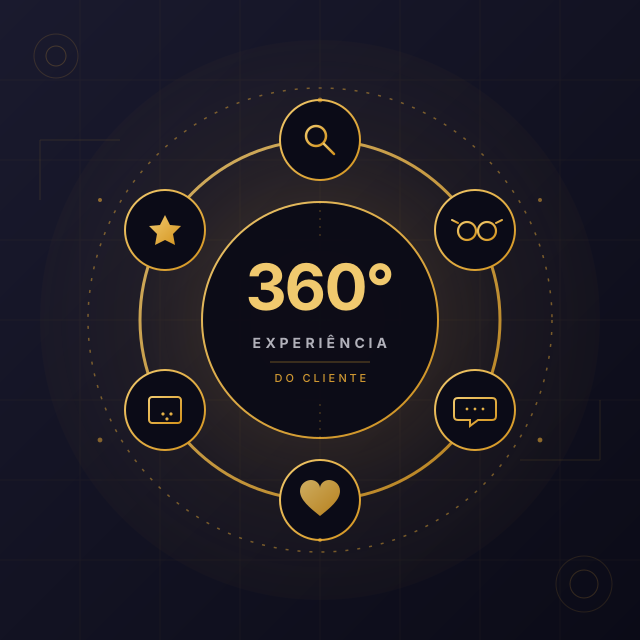
What does a 360º experience look like in practice?
It's not a concept. It's consistency.
In practice:
- Booking connected to communication
- Customer history accessible during service
- Campaigns aligned with the store
- Follow-up after the purchase
Without this, the experience falls apart.
From transaction to relationship
An optical store focused only on the sale always needs new customers.
An optical store that builds the relationship:
- Increases retention
- Reduces dependence on campaigns
- Gains predictability
The difference lies in continuity.
Conclusion
Great service is still essential. But it's no longer enough.
The customer doesn't evaluate a single moment. They evaluate the whole.
And that experience is built before, during, and after the visit to the store.
Want to know how we can help your business?